James Jewhurst — Engineer / Architect / Builder

I build software that makes complicated things feel simple.

I'm James. I build software for real people and real workflows, from automotive platforms and integrations to native apps and developer tools. I care about useful products, sound architecture, and the unglamorous engineering work that makes software hold up in the real world.

Now
Principal Engineer, Shift Automotive
Before
Director of Engineering, VolieSVP of Technology Operations, Bolt On Technology
Public
6 projects

A few things I've built

These are the decisions.

Cursor total included23%

Claude 5-hour100%

Codex 5-hour12%

SettingsAI Usage MeterQuit
01 · macOS · iPhone · WatchShipping

AI Meter

See Cursor, Claude Code, and Codex usage without living in three dashboards. A local-first meter for included pools, rolling windows, spend, and on-demand.

Status
Signed and notarized Mac builds on GitHub Releases. iPhone and Watch stay on TestFlight.
Choice
Credentials stay in the device Keychain. The meter reads local sessions. It does not send them to a backend I run, store tokens in iCloud, or hand credentials to the Watch.
02 · macOS 14+ · Apple siliconShipping

CursorStack

All those Cursor windows, one manageable workspace. A tab strip over the real windows, rather than another editor.

Status
Signed and notarized Mac builds on GitHub Releases. Apple silicon, macOS 14 or newer.
Choice
macOS Accessibility moves, resizes, and focuses the original Cursor windows. CursorStack does not embed Cursor, read source, or upload anything.
03 · iPhone · Watch · MacPublic source

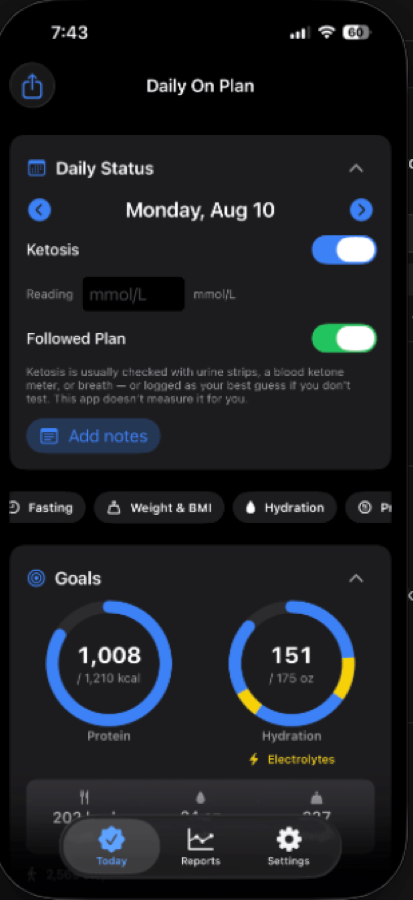
Daily On Plan

A daily nutrition sheet for iPhone, Apple Watch, and Mac. Protein toward a goal, hydration, and whether you followed the plan. Not a service, and not a medical device.

Status
Public source. The README does not establish a public App Store release.
Choice
On the device by default. Optional iCloud sync for the journal. No account, and no backend of mine. iCloud is still a cloud feature.

Practice

Software for the people who keep the real world moving.

Much of my professional work has been in automotive software, on both sides of the industry: dealerships selling and servicing new cars, and the independent repair shops of the aftermarket. Repair shops are complicated places. The work crosses scheduling, estimates, parts, technicians, customers, and systems that do not always speak to each other. That shaped how I think about products. Respect the workflow, integrate carefully, keep things understandable, and make the software reliable when the day gets busy.

  • Product and architecture

    Connect the decision to the system that has to live with it.

  • APIs and integrations

    Make systems that do not share a vocabulary still hand work off cleanly.

  • Engineering leadership and delivery

    Ownership, process, and the path to production are part of the software.

Software should earn its complexity

  1. Solve the real problem.

    A good implementation of the wrong idea is still the wrong idea. Understand the person doing the work and what would actually help.

  2. Start small, and design to last.

    Ship a coherent first version and leave room for what real usage teaches you. Do not prematurely build the platform for version ten.

  3. Care about the details that matter.

    Performance, reliability, privacy, recovery, accessibility, and deployment are part of the product, not polish added after the demo.

  4. Own the whole thing.

    Product understanding, architecture, implementation, operations, and the user experience are connected. Taking responsibility across those boundaries produces stronger software.

  5. Prefer clarity over cleverness.

    If the straightforward version works, that is the version. Cleverness has to earn its place the same way complexity does.

  6. Use AI deliberately.

    AI can compress drudgery, speed research, and support coding. Judgment, verification, security, and responsibility still belong to engineers.

  7. Keep learning by making.

    Small experiments and side projects sharpen the thinking that goes back into larger systems.

  8. The longer version

I still get excited about a good problem.

If you're building something thoughtful, working through a tricky engineering challenge, or trying one of my tools, I'd enjoy hearing about it.